Quick Summary
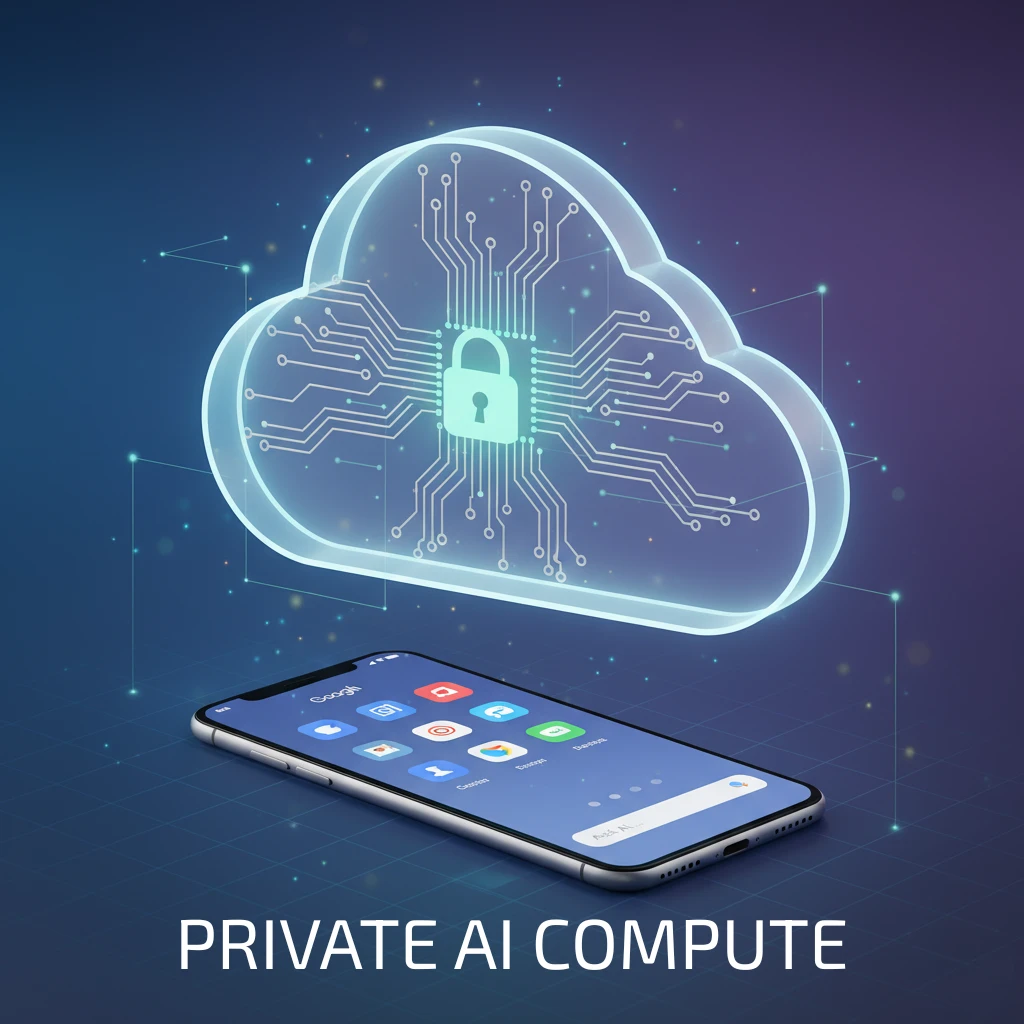
- Private AI cloud technology is changing how we use artificial intelligence. Google has launched a new platform called Private AI Compute that blends cloud‑AI power with strong user data privacy.
- The system uses advanced hardware and encrypted enclaves so data stays accessible only to the user.
- This move mirrors a similar privacy‑first cloud AI strategy from Apple, underscoring how big tech is adapting AI for everyday use.
- For users this means smarter suggestions and faster features, especially on devices, without giving up control of personal data.
- For developers and businesses the shift signals that AI infrastructure is becoming both more capable and more privacy‑centric
Google’s Next Big AI Move
Google has introduced a private AI cloud platform called Private AI Compute. This system allows powerful cloud‑based AI models (such as the Gemini family) to process data in a secured environment so that only the user has access. In short: you get high‑end AI features without surrendering control of your personal information.
Why Privacy Is Now a Feature
AI is becoming more common in phones, apps and services. But powerful AI often needs intense computing. That means the data is sent to big cloud servers, which raises privacy concerns. A private AI cloud allows for faster, smarter features without sending raw data to third-party servers.
With Private AI Compute, Google aims to solve this by giving cloud‑level power with privacy protections.
For users, this can translate into:
- smarter voice assistants and transcription tools
- faster suggestions and responses
- better support across more languages
Google says their “Recorder” app and “Magic Cue” tool on Pixels will benefit from this. In simple terms: you tap into strong AI features without handing over your raw data.
How Google Keeps Your Data Yours
Here’s a simplified explanation:
- Instead of all AI work happening only on your device (which limits capability) or all work happening in a typical cloud (which may limit privacy), Google created a hybrid.
- Your device securely connects to Google’s specialized cloud environment. Google uses its own custom hardware (“TPUs” or Tensor Processing Units) and hardware‑secure enclaves (“Titanium Intelligence Enclaves” or TIE) to isolate and encrypt data.
- The key promise: “Your personal data stays private to you, not even Google can access it.”
- The result: device‑level privacy with cloud‑level AI power.
You’ll get more capable AI features (because of the cloud power) and you don’t lose standard privacy assurances.
Apple vs Google
The new Google system closely resembles what Apple announced with its Private Cloud Compute strategy.
Similarities:
- Both prioritize privacy first.
- Both enable cloud‑level AI power while keeping user data controlled and isolated.
Differences: - Google leverages its own vast cloud infrastructure and TPUs.
- Apple’s system emphasizes its own hardware ecosystem and on‑device first philosophy, using cloud only when needed.
Differences:
- Google’s AI cloud is backed by its global infrastructure, Gemini models, and custom TPUs. Apple centers its AI on-device, tightly integrated with Apple hardware.
- Google’s platform is built for broader use. It supports third-party developers and enterprise tools, not just Google hardware. Apple’s system is more locked into its own ecosystem.
- Google’s cloud spans the globe. Its scale allows for more flexibility, larger workloads, and wider applications across devices and industries.
The major tech players are converging on a concept: “powerful AI + strong privacy” is becoming the baseline.
AI Power Without the Trade-Off
Here are a few implications:
- Better AI features on everyday devices. Because cloud power is available securely the gap between simple device AI and advanced cloud AI narrows.
- Privacy becomes a selling point. As users grow more aware of data risks, platforms that promise “you and only you control your data” will stand out.
- Infrastructure competition matters. Big tech is investing heavily in hardware, isolation, and secure enclaves. That means AI will require not just software innovation but hardware + privacy innovation.
- Business and enterprise impact. Companies building AI‑powered apps will likely need to adopt architectures that respect privacy while scaling compute. This may raise the bar for what AI “done right” looks like.
- User expectations will shift. Soon “smart suggestions” may come with the expectation that your data is protected by default.
The launch of this private AI cloud shows that users no longer have to choose between privacy and performance. Big tech companies are starting to realize that both are essential. And Google’s version may open the door to even more flexible and secure AI experiences.
Final thoughts
In short, Google’s Private AI Compute marks a meaningful step in bringing advanced AI into everyday devices without making privacy the sacrifice. The system shows that you can have smarter AI and stronger data safeguards at the same time.
For users, it means your next phone or app may feel more intelligent and more discreet. For developers and businesses, it signals a new standard for AI infrastructure.
As AI continues its march into daily life, systems like this will shape how the benefits and risks are balanced.
The future of AI is not just “can it guess what you need” but “can it guess what you need and keep your data safe while doing it.”
Discover how AI is reshaping technology, business, and healthcare—without the hype.
Visit InfluenceOfAI.com for easy-to-understand insights, expert analysis, and real-world applications of artificial intelligence. From the latest tools to emerging trends, we help you navigate the AI landscape with clarity and confidence.