Quick Summary
- Merger Talks: SpaceX and xAI are discussing a massive merger.
- IPO Timing: This move comes just before SpaceX’s planned June 2026 IPO.
- Space Data Centers: The goal is to build AI infrastructure in orbit.
- Energy Solution: Space offers unlimited solar power and natural cooling.
- Corporate Moves: New “Merger Sub” entities were filed in Nevada on January 21.
The Big Announcement
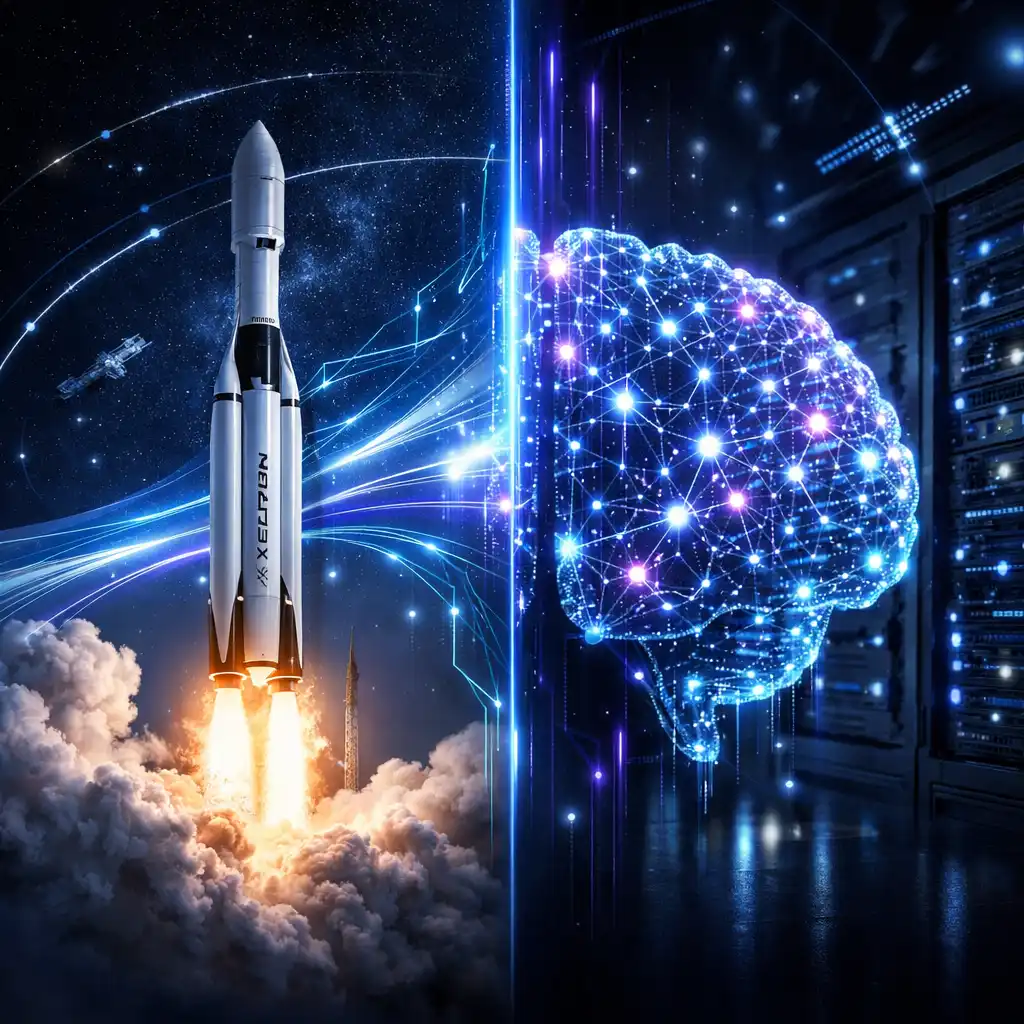
The SpaceX xAI merger is the most significant topic in technology today. Reports confirmed this week that Elon Musk is negotiating a deal. He intends to combine his aerospace giant with his artificial intelligence startup. This is a massive shift. It changes the trajectory of both industries.
SpaceX is the dominant force in rockets. xAI is the creator of the Grok chatbot. They seem like different businesses. But Musk sees a connection. He wants to bring them under one roof. The timing is specific. SpaceX is preparing for an initial public offering (IPO). This IPO is planned for June 2026.
We have seen proof of these talks. Official documents were filed in Nevada. Two new entities appeared on January 21. They are listed as “Merger Sub.” This is standard legal language for a deal. The plan involves a stock swap. Shareholders of xAI would get SpaceX stock. This consolidates Musk’s empire. It brings the physical infrastructure of space together with digital intelligence.
Why Merge? The Energy Problem
You might ask why this makes sense. The answer lies in physics. Artificial intelligence is hungry. It eats electricity. Training a model like Grok requires massive data centers. These centers generate heat. They strain the power grid on Earth.
We are running out of easy power. Major cities cannot support more data centers. The grid is old. It is congested. AI growth is slowing down because of this bottleneck. Musk has found a solution. The solution is not on Earth. It is in space.
Space is cold. It is a vacuum. This makes cooling electronics very easy. You do not need giant air conditioners. You just radiate the heat away. Space is also bright. The sun shines constantly. There are no clouds. There is no night in certain orbits. Solar panels work better there. They provide consistent, clean energy.
The Dyson Swarm Concept
Musk spoke about this recently. He was in Davos, Switzerland. He described a “Dyson Swarm” approach. This is a concept from science fiction. It involves surrounding a star with energy collectors. Musk wants to do a smaller version. He wants to launch data centers into orbit.
Think of a server farm. Now put it on a satellite. It floats in zero gravity. It soaks up sunlight. It processes data for AI. Then it beams the answers back to Earth. This bypasses the terrestrial power grid. It is an elegant solution.
SpaceX builds the rockets. They can launch these heavy servers. They can do it cheaper than anyone else. xAI builds the software. They need the compute power. Merging the companies removes the middleman. It creates a vertical monopoly on space intelligence.
How Grok Meets Starlink
The synergy goes deeper. SpaceX owns Starlink. This is a network of thousands of satellites. They provide internet to the world. Currently, they are just relays. They bounce signals from you to a ground station.
Imagine if the satellite was smart. Imagine it had a Grok AI brain. It could process data instantly. It would not need to send every request to Earth. This is called “edge computing.” But the edge is in orbit.
This is useful for many things. Self-driving cars need fast decisions. Defense systems need real-time analysis. A smart satellite network delivers this. It reduces latency. It increases speed. xAI provides the brain. SpaceX provides the body. The merger makes this integration seamless.
The 2026 IPO Strategy
Money is a major factor here. SpaceX is arguably the most valuable private company. Investors are desperate to buy shares. The planned IPO in June is the financial event of the decade. Analysts predict a valuation over $1.5 trillion.
Adding xAI boosts this number. It adds a “growth story” to the “infrastructure story.” Investors love AI. It is the hottest sector in the market. A combined company is more attractive. It offers the stability of Starlink revenue. It offers the explosive potential of Grok.
The deal structure is clever. It simplifies the investment. You buy one stock. You get the rockets. You get the internet. You get the AI. This appeals to big funds. It justifies a higher price. It also solves a funding problem for xAI. AI development is expensive. SpaceX has cash flow. The merger secures funding for Grok’s future.
A History of Consolidation
Elon Musk has a pattern. He likes to combine his ventures. Look at Tesla. In 2016, Tesla bought SolarCity. SolarCity was a solar panel company. Critics hated the deal. They called it a bailout. Musk ignored them. He said Tesla was an energy company. Today, Tesla sells cars and batteries. The strategy worked.
He did it again last year. xAI acquired the social platform X (formerly Twitter). This happened in March 2025. It gave xAI access to real-time data. Data is fuel for training models. Now, he is doing it a third time.
This consolidation protects his control. It keeps the technology proprietary. It prevents leaks to competitors. It allows engineers to move between teams. A rocket engineer can help with server cooling. An AI coder can help with satellite navigation. The cultures merge. The pace of innovation speeds up.
Risks and Technical Hurdles
This plan is not without risk. Space is a harsh environment. Radiation is a killer for electronics. Standard computer chips fry in orbit. They need shielding. Shielding is heavy. Launching heavy things is expensive.
There is also the issue of maintenance. You cannot fix a server in space. If a chip breaks, it is gone. You have to launch a replacement. The economics are unproven. Critics say it is cheaper to build on Earth. They say the launch costs are too high.
Shareholders might object. Tesla shareholders sued over the SolarCity deal. They claimed conflicts of interest. Musk owns different amounts of each company. A merger might benefit him more than other investors. Lawsuits are likely. Regulators will watch closely. The deal is complex. It is not a guaranteed win.
How the Merger Could Reshape AI’s Global Future
Step back from the business details. Look at the big picture. This is about the future of civilization. We are building a digital nervous system around our planet. It will be powered by the sun. It will be intelligent.
We are leaving the surface. Our computing power is moving to the sky. This frees up resources on Earth. It reduces our carbon footprint. It also prepares us for the next step. Musk wants to go to Mars.
Mars needs AI. Mars needs independent infrastructure. A space-based AI network is a prototype. It is a test run for a Martian colony. The SpaceX xAI merger is not just a corporate maneuver. It is a stepping stone. It brings us closer to becoming a multi-planetary species. The IPO in June is just the fuel. The destination is the stars.
Final Thoughts: Musk’s Vision in Action
The SpaceX xAI merger is still in early stages. But it reflects a clear pattern. Musk wants to own the full AI stack. That means the models, the infrastructure, the deployment tools, and the platform where AI lives.
By merging SpaceX and xAI, Musk could leap ahead of other tech giants who still rely on partners. He would control not just AI training, but also how that intelligence is distributed, possibly even from space.
For startups, investors, and engineers, this move is a signal. The future of AI is not just about better models. It is about who controls the systems that run them.
Discover how AI is reshaping technology, business, and healthcare—without the hype.
Visit InfluenceOfAI.com for easy-to-understand insights, expert analysis, and real-world applications of artificial intelligence. From the latest tools to emerging trends, we help you navigate the AI landscape with clarity and confidence.