Quick Summary
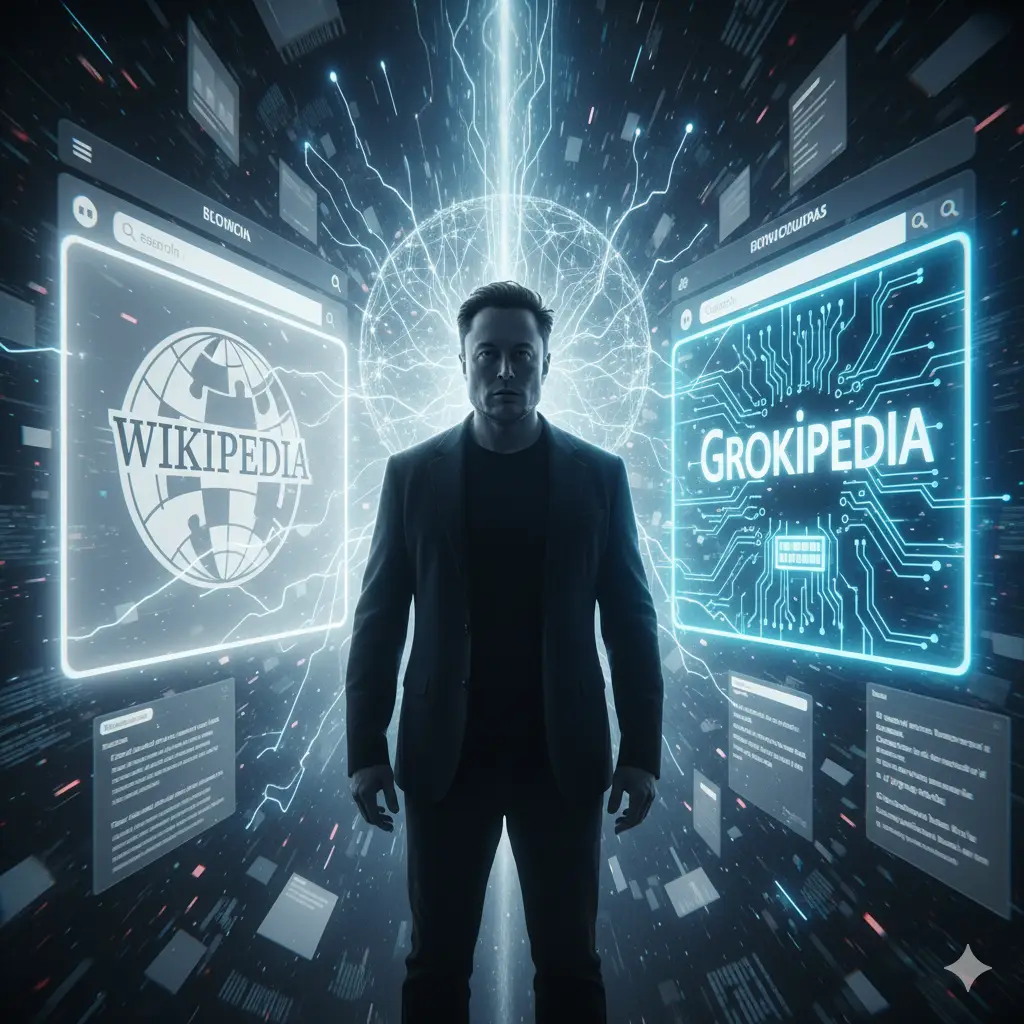
- Grokipedia is a new online encyclopedia launched by Elon Musk via his AI company xAI that aims to compete with Wikipedia.
- It launched in late October 2025 with around 800,000‑900,000 articles, compared to Wikipedia’s millions.
- The underlying editorial model is very different, many articles are generated or adapted by AI, user editing is more limited, and the process is less transparent.
- The project raises major questions about accuracy, bias, neutrality, and the future role of knowledge platforms online.
- For content creators and readers, Grokipedia could influence search, credibility, how information is cited, and how AI is used in knowledge production.
What is Grokipedia?
Grokipedia is described as an AI‑powered online encyclopedia developed by xAI and launched in late October 2025. It uses the chatbot model Grok (also from xAI) as part of its engine. The site launched in a version labelled “0.1” and claims roughly 885,000 articles soon after launch. The aim, as stated by Musk and xAI, is to create a “massive improvement over Wikipedia” by reducing perceived bias and updating how knowledge is captured and presented.
Why was Grokipedia created?
There are a few driving motives behind Grokipedia:
- Elon Musk has publicly criticised Wikipedia, asserting it suffers from bias and ideological leanings.
- The move aligns with xAI’s broader AI ambitions; building knowledge infrastructure that can feed or support AI systems, not just human readers.
- It taps into a wider trend: as AI becomes more central to how people find and use information, owning or influencing “knowledge bases” becomes a strategic asset.
- Also: offering an alternative to Wikipedia gives an opportunity to re‑frame how encyclopedic content is generated, edited and maintained with an AI centre rather than purely human‑volunteer community.
Grokipedia vs Wikipedia: The Difference
Here are some of the key differences:
Editorial model & authorship
- Wikipedia allows anyone to edit pages, and has a transparent revision history and community governance.
- Grokipedia, by contrast, appears to depend heavily on AI generation or adaptation of existing Wikipedia content and users cannot yet edit directly, only flag issues.
Scale & maturity
- Wikipedia (English version) has over 7 million articles.
- Grokipedia launched with ~800,000‑900,000 articles Significantly fewer, making it still early stage.
Content sourcing & licensing
- Some Grokipedia entries are nearly identical to Wikipedia ones, with statements such as “content adapted from Wikipedia, licensed under Creative Commons”.
- Because of the AI model and adaptation, the sourcing, editorial standards and update frequency are less clear than Wikipedia’s well documented policies.
Bias, tone, transparency
- Reports suggest Grokipedia presents information in ways that reflect certain ideological viewpoints more strongly than Wikipedia. For example, articles may downplay or reinterpret certain topics (e.g., climate change, gender topics).
- Wikipedia has open discussion pages, edit histories, citations visible to all; at launch Grokipedia lacks some of that visibility.
User interaction
- On Wikipedia you edit, contribute, change text; on Grokipedia you can browse, search, maybe suggest corrections, but cannot yet freely edit.
Key criticisms and concerns
Given the differences, a number of valid concerns have emerged.
Accuracy & verification
Because Grokipedia uses AI-generated or adapted content, the risk of errors, omissions or mis‑framing is higher. For example, some articles have been found to mirror Wikipedia almost verbatim, raising questions about added value or freshness.
Bias & viewpoint
Critics argue Grokipedia may lean toward one ideological perspective — in part because of Musk’s stated goals and involvement. Some entries reportedly reflect far‑right talking points or omit widely accepted facts.
Transparency & trust
The hallmark of Wikipedia is open community editing and clear policies. Grokipedia’s early version lacks that full transparency, which may reduce trust in how decisions are made, how sources are vetted, and how updates are processed.
Competition vs complement
Is Grokipedia truly a replacement, or more of a parallel alternative? With significantly fewer articles and still early in its life-cycle, replacing Wikipedia entirely is a massive task. Many observers believe it may take years, if ever, to reach that level.
Data and licensing issues
The fact many articles are adapted from Wikipedia (which uses Creative Commons licensing) raises questions about originality and whether the project adds new knowledge or simply repackages existing material.
Why it matters
Why should you care? Here are several implications:
For readers
- The rise of Grokipedia suggests more alternatives to how knowledge is constructed online. That means you need to be more discerning about where you get your facts.
- It highlights how AI is influencing not just tools (chatbots, content creation) but the very foundations of information — what’s true, what’s edited, who writes it.
For content creators & marketers
- If Grokipedia gains credibility, it could become a source of citation or influence search results and knowledge graphs (which could affect SEO).
- You may need to monitor how the narrative around topics you cover (especially AI, tech, bias, media) shifts depending on which encyclopedia is referenced.
- For a brand like yours (Influence of AI), this is an opportunity: you can lead the conversation about “who controls knowledge,” “AI in encyclopedias,” “bias in AI knowledge bases,” etc.
For SEO and content strategy
- The introduction of new authoritative platforms (like Grokipedia) can change what Google sees as “trusted sources.” Keeping tabs on such platforms may help your strategy.
- Use this topic as a high‑interest content piece: “Grokipedia vs Wikipedia,” “How AI is rewriting the encyclopedia,” “What it means for search and trust.” These can drive traffic, engagement, backlinks.
For knowledge ecosystems
- The launch signals a shift: AI isn’t just answering questions, now it’s shaping how information is stored, edited and accessed. That has ripple effects on education, journalism, public discourse.
- As more AI‑driven projects emerge, knowing the pros and cons becomes part of digital literacy. As you create content, you’re helping your readers become better informed in this evolving landscape.
Final thoughts
So is Grokipedia the end of Wikipedia as we know it? Not yet. At this moment, Wikipedia remains the dominant free online encyclopedia with deeply entrenched community processes, massive scale and long‑standing reputation. But Grokipedia is a meaningful challenger; one that represents a shift in how information may be curated, who curates it, and what gets included.
For now Grokipedia is in its early stage (version 0.1), with far fewer articles, less user editing, and more questions than answers about its editorial model and long‑term credibility. What it does offer is a provocative experiment: what if an encyclopedia were built from the ground up with AI at its heart, and with a clear branding around “truth” and “less bias”?
As a content creator or marketer, keep an eye on this. The knowledge foundations of the internet are evolving. Platforms like Grokipedia may not replace Wikipedia tomorrow, but they may influence how people access, trust and use information and that means opportunities for you to comment, analyze and create helpful content.
Discover how AI is reshaping technology, business, and healthcare—without the hype.
Visit InfluenceOfAI.com for easy-to-understand insights, expert analysis, and real-world applications of artificial intelligence. From the latest tools to emerging trends, we help you navigate the AI landscape with clarity and confidence.