Quick Summary
- Gen Z excitement about AI dropped from 36% to 22%
- Hopefulness also declined from 27% to 18%
- Anger toward AI rose from 22% to 31%
- AI usage remains steady despite sentiment shift
- Over half of Gen Z still use AI weekly or daily
- Students increasingly feel AI skills are necessary
A shift in how Gen Z sees AI
Gen Z AI hype slows as trust fades, based on new survey data. The findings show a sharp change in how young people feel about artificial intelligence.
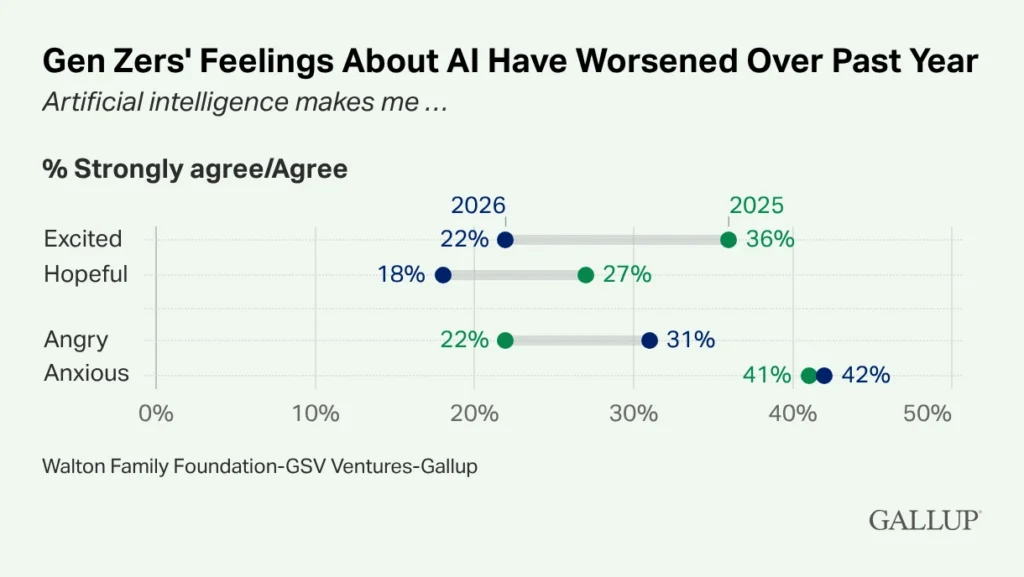
Excitement about AI dropped significantly over the past year. In 2025, about 36% of Gen Z respondents said AI made them feel excited. In 2026, that number fell to 22%.
Hopefulness followed a similar trend. It declined from 27% last year to 18% this year. At the same time, negative sentiment increased, which signals a growing emotional shift rather than simple hesitation.
AI use stays part of daily life
Despite these changes in sentiment, AI usage has not declined. The survey shows that adoption remains stable among Gen Z users.
About 22% of respondents said they use AI daily. Another 29% said they use it weekly. This means just over half of Gen Z continues to rely on AI tools regularly.
This pattern suggests that AI has already become embedded in daily routines. Usage continues even as attitudes become more cautious.
Gen Z AI hype starts to cool
The most notable shift in the data is the rise in negative emotion. The share of respondents who said they feel angry about AI increased from 22% to 31%.
This rise in frustration stands alongside the drop in excitement and hope. It reflects a more complex emotional response to AI.
Even frequent users are not immune to this shift. Daily users still report more curiosity and optimism than occasional users. However, their levels of excitement and hope have also declined compared to last year.
This reinforces the idea that increased exposure to AI does not automatically build trust.
Why Gen Z feels the pressure
Researchers suggest that this rising concern may be tied to future job prospects. Younger users may feel more directly affected by how AI could shape entry-level work.
Researchers note that older Gen Z respondents show higher levels of frustration. This group is closer to entering the workforce, which may increase sensitivity to changes driven by AI.
Younger generations are also more familiar with digital systems. This awareness may make them more alert to both the benefits and risks of AI.
Similar patterns have been observed in research from Pew Research Center, which highlights growing public concern about how AI could impact jobs and decision-making.
Schools push toward AI readiness
The survey also shows that students are preparing for an AI-driven future. Many believe that AI skills will be necessary for education and career success.
Among Gen Z K-12 students, 52% said they expect to need AI skills for college or future classes. This is an increase from 47% in the previous year.
This shift reflects growing awareness of AI’s role in education. Even students who feel uncertain about AI recognize its importance.
Data also shows that technology adoption in schools often moves quickly, which aligns with these findings.
Preparing for AI, with doubts
Confidence in using AI is also rising. About 56% of K-12 students said they believe they will have the skills to use AI daily after graduation. This is up from 44% last year.
This increase shows a practical mindset. Gen Z may not feel fully positive about AI, but they are preparing to use it.
Researchers describe this as a form of reluctant acceptance. AI is seen as necessary, even if it is not fully trusted. This balance between skepticism and readiness may define how Gen Z interacts with AI in the coming years.
Conclusion
Gen Z AI hype slows as trust fades, but usage remains steady. The latest survey shows a clear emotional shift, with excitement and hope declining while frustration grows.
At the same time, AI remains part of daily life. Many young users continue to rely on it for school and personal tasks.
Gen Z is not rejecting AI. Instead, this generation is approaching it with caution. They are learning how to use it while questioning its impact.
This tension between adoption and trust may shape the next phase of AI development.
Discover how AI is reshaping technology, business, and healthcare—without the hype.
Visit InfluenceOfAI.com for easy-to-understand insights, expert analysis, and real-world applications of artificial intelligence. From the latest tools to emerging trends, we help you navigate the AI landscape with clarity and confidence.