Quick Summary
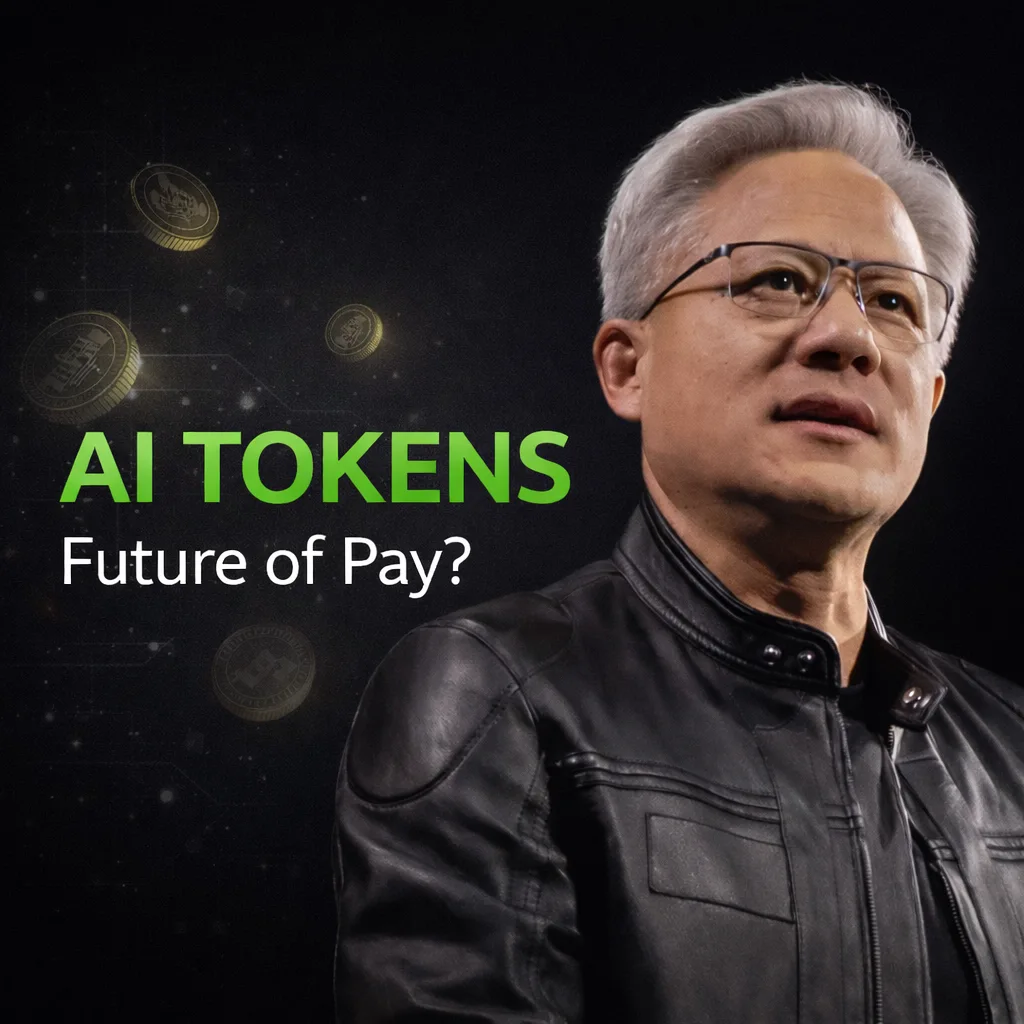
- AI tokens are being explored as a new way to compensate engineers
- Nvidia CEO Jensen Huang has discussed token-based rewards tied to AI systems
- OpenAI CEO Sam Altman believes AI tokens could support future income models
- The idea connects to long-standing discussions around universal basic income
- Experts see both opportunity and uncertainty in how tokens would work in practice
Nvidia Floats a New Way to Pay Engineers
The concept of AI tokens is starting to appear in discussions among top technology leaders. The idea focuses on how engineers and contributors could be rewarded for building and improving AI systems.
Jensen Huang raised the idea during GTC 2026, Nvidia’s flagship developer conference where the company outlines its latest AI strategy. He pointed to AI tokens as a potential way to reward engineers, with compensation linked more directly to the long-term value of the systems they create.
These tokens would represent a form of ownership or participation. They could reflect how much value an individual contributes to a system over time.
This approach suggests a shift in how work is measured. It moves away from fixed pay and toward ongoing participation in AI-driven value.
How AI Tokens Could Actually Work
AI tokens would likely function as digital units connected to specific models or platforms. Engineers who build or improve these systems could receive tokens based on their contributions.
The value of these tokens could increase as the AI system grows in use. This creates a model where contributors benefit from long-term success rather than only short-term compensation.
In simple terms, tokens act like a share of the system’s output. As more people use the AI, the system generates more value. Contributors may then see their tokens gain worth.
This idea connects to broader trends in digital ownership. Token systems have already been explored in blockchain-based projects. Some platforms use tokens to reward participation and maintain decentralized networks.
Research from MIT has examined how token economies can influence collaboration and incentives in digital systems.
Altman Connects AI Tokens to Future Income
Sam Altman has taken the idea further by linking AI tokens to future income models. He has suggested that tokens could eventually support a form of universal basic income.
Universal basic income refers to regular payments given to individuals without conditions. It has been studied as a way to support people in economies shaped by automation.
Organizations have explored how income guarantees could reduce poverty and stabilize economies.
In the context of AI, the idea is that highly productive systems could generate enough value to distribute widely. Tokens could act as a mechanism to share that value.
This concept reflects growing concern about how AI may affect jobs. As automation expands, fewer roles may be needed in certain industries. New income models could help balance that shift.
Why Tech Leaders Are Taking This Seriously
The interest in AI tokens is not random. It reflects deeper changes in how technology creates value.
Modern AI systems rely on large teams. Engineers, researchers, and data contributors all play a role. Traditional compensation models may not fully capture that ongoing contribution.
Token-based systems offer a different structure. They reward people over time. They align incentives between creators and the systems they build.
There is also a broader economic motivation. AI is expected to drive significant productivity gains. According to researc, AI could add trillions of dollars to the global economy each year.
Leaders are now asking how that value should be distributed. Tokens present one possible answer.
AI Tokens and Future Pay Models
A Shift in How Work Is Rewarded
AI tokens may signal a move toward performance-based ecosystems. Instead of fixed salaries, contributors could earn based on impact.
This approach may benefit highly skilled workers. It could also create new paths for participation. People may contribute in smaller ways and still receive rewards.
A New Layer of Digital Ownership
Tokens introduce the idea of shared ownership in AI systems. Contributors may feel more connected to the outcomes of their work.
This could lead to stronger collaboration. It may also change how teams are structured. Projects could become more decentralized over time.
More People Could Share in the Upside
If tokens are distributed widely, more people could benefit from AI growth. This supports the idea of inclusive value creation.
However, the exact structure remains unclear. Systems would need to ensure fairness and transparency.
Challenges and Open Questions
While the idea of AI tokens is gaining attention, it comes with several challenges.
One concern is how to measure contribution accurately. AI systems involve many layers of work. Assigning value to each contribution can be complex.
Another issue is volatility. Token values may fluctuate. This could make income less predictable.
Regulation is also a factor. Governments may need to define how tokens are treated. Questions around taxation and legal status remain open.
There is also the risk of inequality. If tokens are distributed unevenly, they could reinforce existing gaps rather than reduce them.
Experts from organizations like Brookings Institution have noted that new economic models must be carefully designed to avoid unintended consequences.
Where AI Tokens Could Go Next
The idea of AI tokens is still in an early stage. It represents a shift in thinking rather than a fully developed system.
If implemented effectively, tokens could reshape how people earn income in an AI-driven world. They could provide a link between technological progress and everyday financial stability.
At the same time, the concept raises important questions about fairness, governance, and long-term sustainability.
What is clear is that leaders in the AI space are starting to explore new economic models. AI tokens are one of the most discussed ideas in that conversation.
Conclusion
AI tokens introduce a new way to think about compensation and income. The idea connects technical innovation with economic change.
Voices like Jensen Huang and Sam Altman highlight how tokens could reward contributors and support broader income systems.
The concept remains experimental. It requires careful design and real-world testing.
Still, it reflects a larger shift. As AI continues to grow, the way value is created and shared may change with it.
Discover how AI is reshaping technology, business, and healthcare—without the hype.
Visit InfluenceOfAI.com for easy-to-understand insights, expert analysis, and real-world applications of artificial intelligence. From the latest tools to emerging trends, we help you navigate the AI landscape with clarity and confidence.