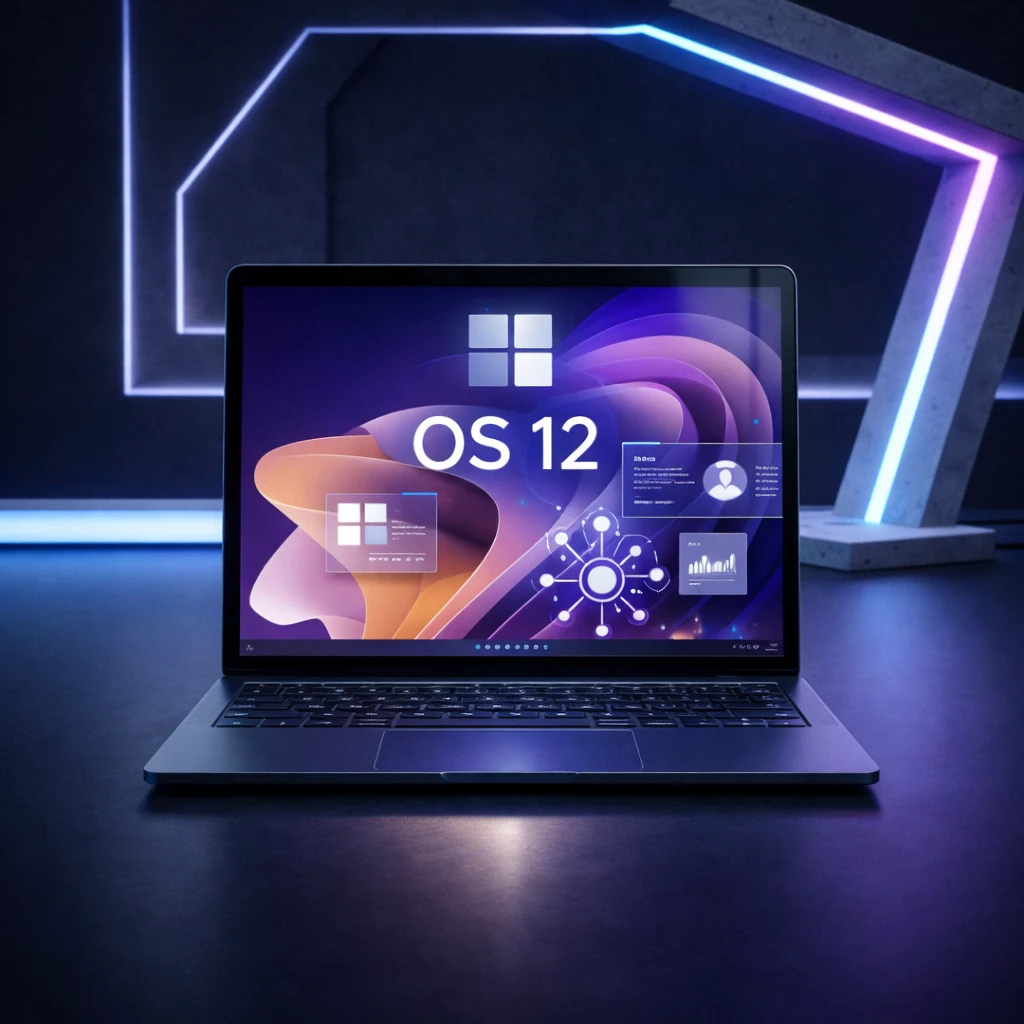
Quick Summary
- Reports suggest Microsoft is preparing a Windows 12 AI OS with artificial intelligence built into the core experience.
- The operating system may use a modular architecture that lets components be added or removed.
- Microsoft’s Copilot assistant could become a central system feature instead of an optional tool.
- Some advanced AI capabilities may require a subscription service.
- Full functionality could require a new generation of AI PCs with dedicated NPU hardware.
Microsoft appears to be preparing a major shift in how its operating system works. Reports point to a new generation of Windows built around artificial intelligence.
The upcoming Windows 12 AI OS is rumored to integrate AI directly into the operating system. Artificial intelligence would no longer sit on top of the system as a separate tool. It would operate as a core feature of everyday computing.
This approach reflects a wider shift across the technology industry. Companies are increasingly designing software around AI capabilities rather than adding them later.
The result could be the most significant change to Windows since the launch of Windows 11.
Microsoft Is Quietly Rebuilding Windows Around AI
Windows has been the dominant desktop operating system for decades. Millions of people rely on it for work, gaming, and daily productivity.
Microsoft now appears to be repositioning the platform around artificial intelligence.
Industry reports suggest the next version of Windows will place AI features at the center of the user experience. This design could automate tasks, summarize information, and help users navigate the system more efficiently.
The timing also aligns with a major milestone. Support for Windows 10 is scheduled to end in 2026. A new operating system could encourage users to upgrade their devices during that transition.
For Microsoft, the shift signals a long term strategy. The company is moving Windows from a traditional operating system toward an intelligent computing platform.
A Modular Design Built Around CorePC
One of the most notable ideas behind the rumored system is a modular architecture.
The Windows 12 AI OS may rely on an internal project known as CorePC. This framework restructures Windows into independent components that can be installed or removed.
Traditional versions of Windows are built as a large unified system. Every installation includes the same set of components. Updates also apply to the entire operating system.
A modular structure changes this approach.
Individual features could be installed separately. Updates could affect only specific parts of the system. Different device types could run tailored versions of Windows.
For example, a gaming PC might include performance features. A lightweight laptop might use a minimal configuration.
This design could improve performance and flexibility across a wide range of devices.
How the Windows 12 AI OS May Change Everyday PC Tasks
Artificial intelligence is expected to play a central role in the Windows 12 AI OS.
Microsoft already introduced its Copilot assistant in Windows 11. In that version, Copilot works as a separate interface that users can open when needed.
In the next version of Windows, AI may become a system level feature. The assistant could interact with files, applications, and system settings automatically.
Several potential capabilities have been discussed in early reports:
- Intelligent document summaries
- Automatic organization of files and photos
- Context aware search across the system
- Real time language translation
- Automated task recommendations
Many of these features rely on advanced machine learning models. They require substantial computing power to run effectively.
For Microsoft, embedding AI directly into the operating system would transform how users interact with their computers.
Instead of navigating menus and folders, users may rely on conversational prompts and automated suggestions.
Some AI Features May Not Be Free
Another reported change involves the business model for certain AI capabilities.
The core version of Windows would likely remain a traditional one time purchase. This approach follows the licensing model used in previous releases.
However, some advanced AI features could require a subscription. These services might connect to Microsoft’s cloud infrastructure to provide additional processing power.
Cloud based AI can deliver more complex capabilities than local hardware alone. It can process larger models and access vast datasets.
Subscription options could include tools for content generation, enterprise automation, or advanced productivity workflows.
This model mirrors trends across the software industry. Many companies now offer core software with optional premium features delivered through cloud subscriptions.
Why Many Older PCs Might Not Qualify
Hardware requirements may be one of the biggest challenges for the Windows 12 AI OS.
Reports suggest that full functionality could require a Neural Processing Unit, often called an NPU. This chip is designed specifically for AI workloads.
Some leaks suggest the operating system may require an NPU capable of roughly 40 trillion operations per second to support advanced AI features.
An NPU allows AI models to run locally on the device. This approach improves speed and reduces reliance on cloud processing.
Local AI processing also improves privacy. Sensitive data can remain on the device rather than being sent to remote servers.
However, many existing computers do not include dedicated AI hardware. Millions of current PCs may not meet the full requirements of the new system.
This situation could trigger a major upgrade cycle for personal computers.
Manufacturers such as Intel and AMD are already promoting new processors designed for AI workloads. Some PC makers have begun marketing devices as “AI PCs” to highlight this capability.
Microsoft May Also Be Rethinking the Windows Interface
The Windows 12 AI OS could also introduce a new visual design.
Early reports suggest the interface may include transparent elements and modern glass like effects. A floating taskbar could separate from the bottom of the screen.
System indicators may move to the upper corner of the interface. A prominent search bar could appear at the top of the screen to emphasize AI driven interaction.
These design changes reflect a broader shift toward AI centered workflows.
Search and conversation could become the primary way users interact with the system.
Instead of opening menus, users may type or speak commands that trigger AI assisted actions.
What Windows 12 Could Actually Change for PC Users
If these reports prove accurate, the next version of Windows would represent a major evolution.
The operating system would move from a traditional interface toward an intelligent platform that actively assists users.
Several key trends emerge from the early information:
- AI becomes a core feature
Artificial intelligence could guide many daily tasks across the system. - Hardware requirements will increase
New processors designed for AI workloads may become standard. - Customization improves through modular design
Different devices could run tailored versions of Windows. - Subscription services expand
Premium AI capabilities may become part of a broader cloud ecosystem.
This shift mirrors changes across the technology landscape. Companies are redesigning products around AI capabilities that were not possible only a few years ago.
For users, the next version of Windows could feel very different from the operating systems that came before it.
Conclusion
The rumored Windows 12 AI OS signals a potential turning point for personal computing.
Artificial intelligence appears poised to move from a supporting role to the center of the operating system. Modular architecture could reshape how Windows installs and updates. New hardware requirements could accelerate the rise of AI powered PCs.
Many details remain unconfirmed. Microsoft has not officially announced the operating system or its release schedule.
Even so, the direction is clear.
The next generation of Windows may be designed for a world where artificial intelligence is part of every computing experience.
Discover how AI is reshaping technology, business, and healthcare—without the hype.
Visit InfluenceOfAI.com for easy-to-understand insights, expert analysis, and real-world applications of artificial intelligence. From the latest tools to emerging trends, we help you navigate the AI landscape with clarity and confidence.