Quick Summary
- AI in advertising is transforming how creative teams work.
- Brands are testing generative AI tools for faster content creation.
- Creative roles in advertising are shifting, not disappearing.
- AI can produce endless image and video variations.
- Agencies are rethinking talent and workflows.
- Major brands like Unilever and Coca-Cola are experimenting with AI ads.
- AI still needs human oversight to guide brand voice and ethics.
Why Advertising Is Ripe for AI Disruption
Advertising relies on speed, scale, and creativity. AI tools now offer all three. With generative models like OpenAI’s DALL·E and tools like Runway or Midjourney, agencies can generate visuals, scripts, or ad copy in seconds. That’s a major shift for an industry built on long production timelines and expensive shoots.
AI fits into a growing demand for high-volume, personalized content. Brands need to adapt quickly to social trends, new platforms, and shifting consumer expectations. Traditional ad workflows aren’t built for that pace. AI offers an edge.
How Brands Are Using AI in Campaigns
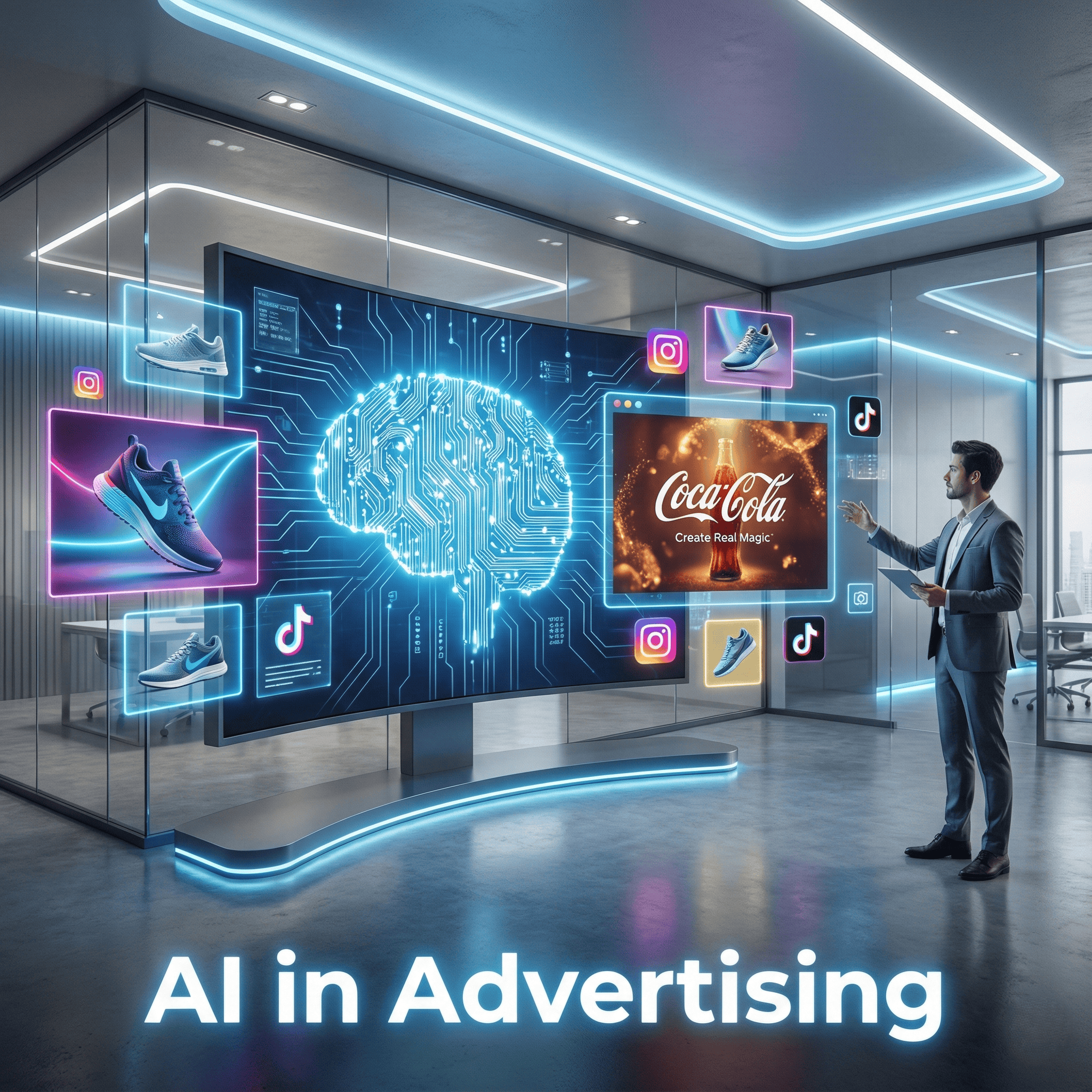
Many big brands are already testing AI in creative production. Coca-Cola launched its “Create Real Magic” campaign using generative AI to remix classic brand assets. Nestlé used AI to recreate a classic ad featuring a now-deceased actor. Unilever has integrated AI into hundreds of internal projects, from image generation to copywriting.
These aren’t just experiments. They’re signals of a changing playbook. According to the Interactive Advertising Bureau (IAB), marketers are under pressure to produce more content with fewer resources. AI fills that gap.
The Rise of AI-Generated Creatives
AI can now generate ad assets in bulk. Think of hundreds of product images, each tailored to a different audience, language, or region. This level of variation was nearly impossible before. Now it’s standard.
Tools like Runway or Synthesia let teams produce video ads without actors or camera crews. Agencies are building proprietary models trained on a brand’s voice, tone, and imagery. That means ads can be created automatically, but still feel on-brand.
This is not about replacing creativity. It’s about scaling it.
What This Means for Creative Jobs
AI is reshaping creative roles. Copywriters, designers, and art directors still matter. But their roles are evolving. Instead of starting from scratch, many now curate and edit AI-generated drafts.
Some agencies, like Publicis or WPP, have started hiring “AI prompt designers” or “AI creative leads.” These roles focus on guiding the model, not fighting it.
The shift is similar to what happened with Photoshop or digital editing. Tools change. Ideas still come from people.
Benefits of AI in Ad Production
Here’s what AI brings to the table:
- Speed: Faster brainstorming, scripting, and asset creation
- Scale: Personalized ads for different platforms and audiences
- Cost Savings: Fewer shoots, less manual editing
- A/B Testing: More variations, faster results
For agencies under budget pressure, this is a game-changer. AI allows them to do more with less.
Limitations and Ethical Concerns
Despite the hype, AI can’t run the show alone. Models can hallucinate, introduce bias, or miss cultural context. They also risk producing generic, soulless content when not guided well.
Some brands have faced backlash for using deepfake actors or misleading AI imagery. Authenticity still matters. Legal frameworks around copyright and AI-generated content are also still evolving.
The World Federation of Advertisers (WFA) has urged brands to adopt ethical guidelines for AI. These include transparency, consent, and brand safety.
The Future of AI in Advertising
AI is not replacing ad agencies. It’s transforming them. Agencies that adapt will stay competitive. Those that ignore it risk falling behind.
Expect to see more “human-AI collaboration” in campaign development. Creative teams will still drive the vision. AI will support execution, optimization, and personalization.
Some predict AI will eventually handle entire campaign pipelines. Others believe it will always need human input. The truth likely lies in between.
What’s clear: AI in advertising is no longer optional. It’s the new normal.
Final Thoughts
AI in advertising isn’t about eliminating jobs. It’s about expanding creative potential. As the tools improve, the best campaigns will blend human insight with machine power.
Advertising isn’t dead. It’s just being reimagined.
Discover how AI is reshaping technology, business, and healthcare—without the hype.
Visit InfluenceOfAI.com for easy-to-understand insights, expert analysis, and real-world applications of artificial intelligence. From the latest tools to emerging trends, we help you navigate the AI landscape with clarity and confidence.